



















01 |THE LIMITATION
One model each. Graphs by workaround, vectors by extension, the present tense only.
Graphs by workaround
Vectors as an extension
Current state only
02 |THE DIFFERENCE
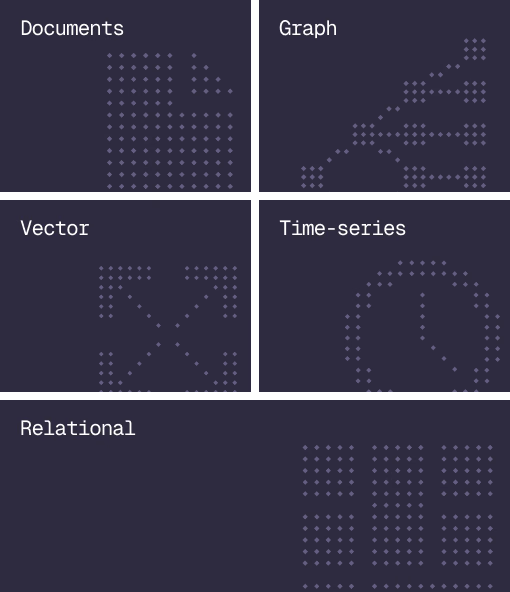
Everything in one engine. Documents, graphs, vectors, time-series and geospatial, in one language and one transaction.
Native multi-model
Documents, graphs, vectors, time-series and geospatial, all first-class in one engine.
SurrealQL
One SQL-like language: joins, traversals and vector search share a syntax.
ACID across models
One transaction boundary. A document and its graph relationships update atomically.
Agent-ready
Agent Memory: knowledge graphs, entity extraction and temporal facts, in the database.
03 |HOW IT WORKS
One statement, three models. A customer record, the graph of what they bought and the vector that describes them, read together in one SurrealQL statement.
Three generations of database infrastructure
Gen 1: Monolith
Gen 2: Proprietary loose coupling
Gen 3: Open storage on the lake
TRUSTED BY
Enterprise teams building on SurrealDB







Traditional databases,answered
THE PLATFORM
Everything an application and its agents know. Five surfaces, one engine.
Database
Document, graph, vector, time-series and relational in one engine.
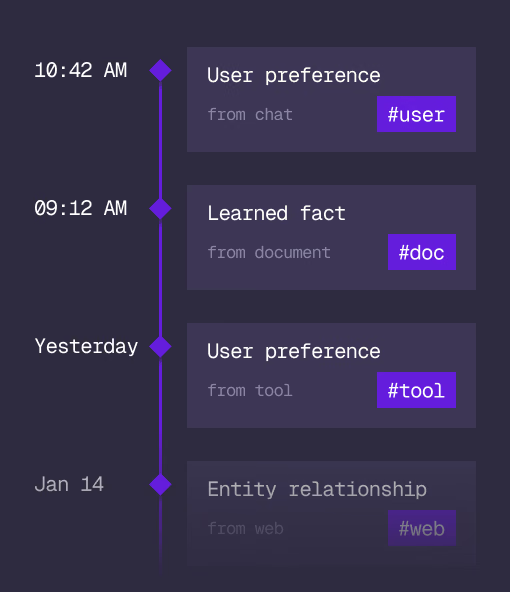
Agent Memory
What an agent learns, with its source and its time, in the same engine.
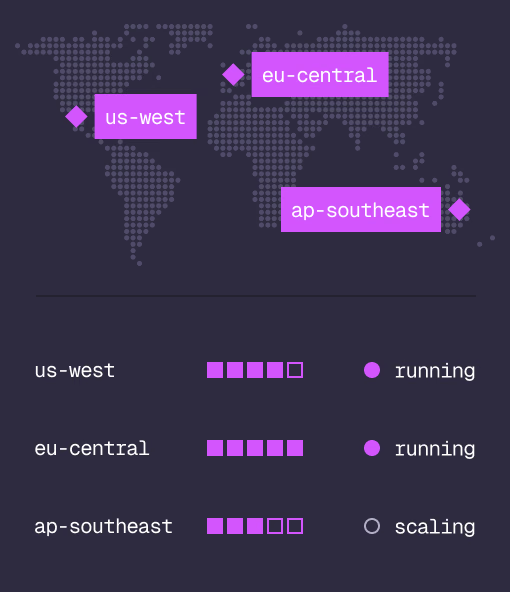
Cloud
Managed clusters in the regions you choose, scaled on demand.
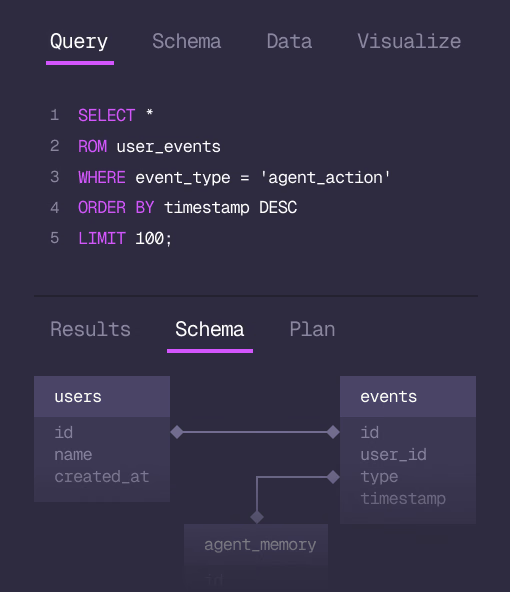
Studio
Query, explore and design the schema from the browser.
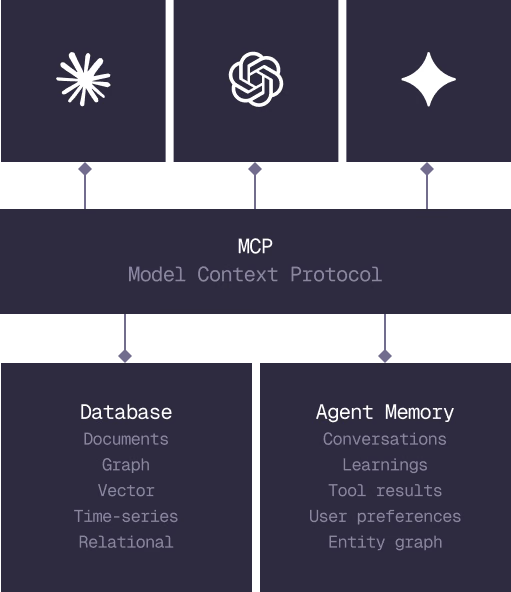
MCP
Every model that speaks MCP reaches the database and the memory directly.
IN PRODUCTION
Trusted at scale. Samsung, Nvidia, Verizon, Tencent, and Walmart run on SurrealDB.
14,000+
Developers building on SurrealDB Cloud
4M+
Developers building on SurrealDB worldwide
FROM THE TEAMS
SurrealDB gives us a foundation where we can unify semantic search, knowledge graphs, and AI-driven decision making without stitching together multiple systems. Collapsing responsibility into SurrealDB has become our default engineering posture.
VP of Engineering, Later
GET STARTED