


















01 |HYBRID RETRIEVAL
Vector search beside structured data
Co-located embeddings
Vectors live beside the entities they represent, in the same record.
Hybrid queries
Cosine similarity, graph traversal, full-text search and structured filters in one statement.
Knowledge enrichment
Discover connections by similarity, then materialise them as edges for later traversal.
Beside Neo4j
Native graph beside documents, vectors, full-text and time-series in one engine. A dedicated graph database leans on other systems for the rest.
Existing ontologies import
The ontology is defined in SurrealQL schema, so an existing one maps onto table and relation definitions.
02 |OPERATIONAL KNOWLEDGE GRAPHS
Digital twins as living knowledge graphs. Assets, dependencies and telemetry in one engine.
Assets as nodes
Machines, sites, suppliers and people as records, with their dependencies as typed edges between them.
Telemetry in time
Readings as time-indexed values on the same records, so the graph carries its own history.
Recall over documents
Embeddings for the manuals, tickets and notes around each asset, queried with the graph.
03 |ONTOLOGICAL MODELLING
Your schema is your ontology. Tables are entity types, relations are relationship types, and edges carry their own properties.
Define the ontology
Relationships as documents
THE PLATFORM
Everything an application and its agents know. Five surfaces, one engine.
Database
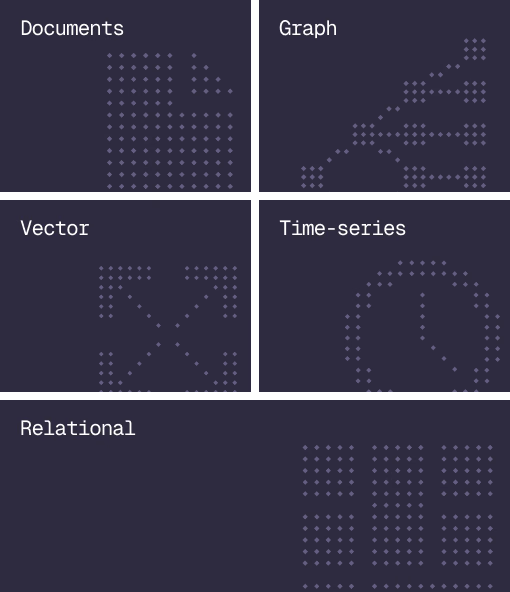
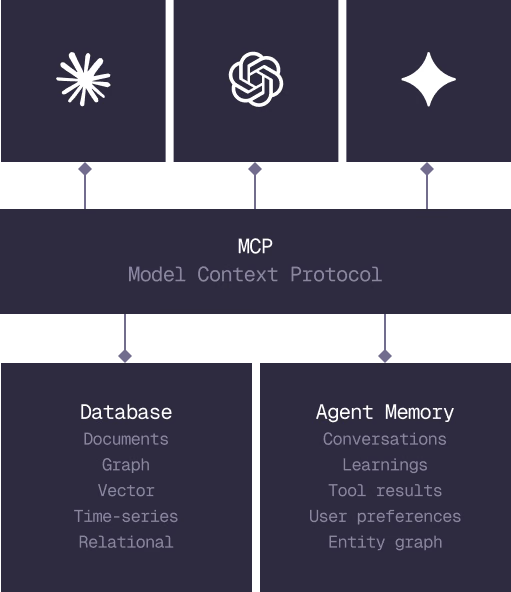
Document, graph, vector, time-series and relational in one engine.
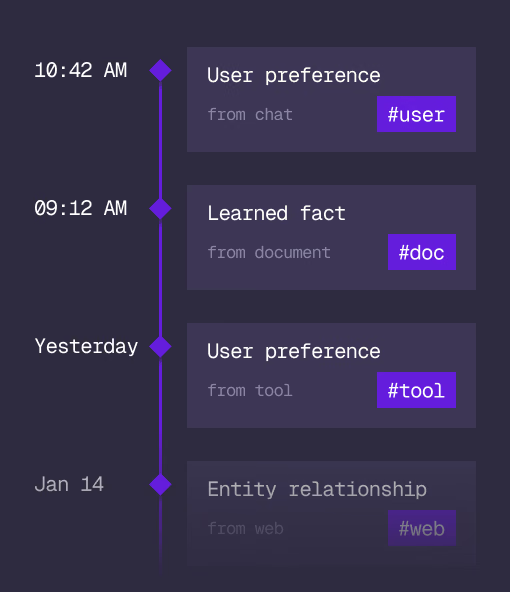
Agent Memory
What an agent learns, with its source and its time, in the same engine.
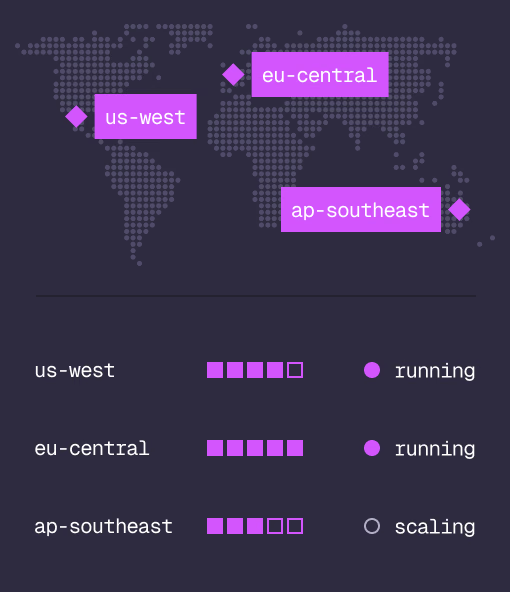
Cloud
Managed clusters in the regions you choose, scaled on demand.
Studio
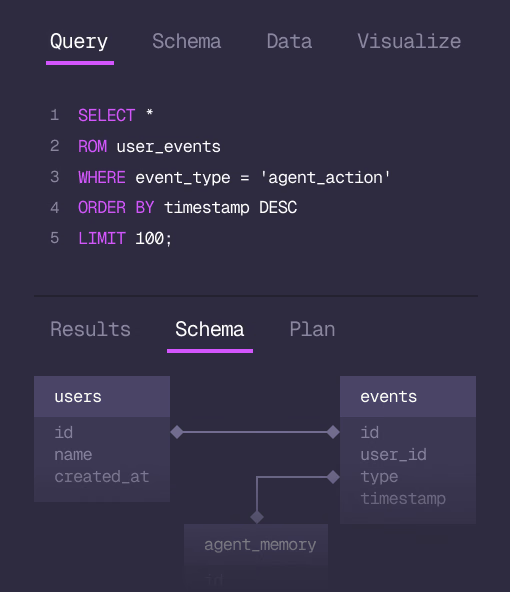
Query, explore and design the schema from the browser.
MCP
Every model that speaks MCP reaches the database and the memory directly.
IN PRODUCTION
Trusted at scale. Samsung, Nvidia, Verizon, Tencent, and Walmart run on SurrealDB.
14,000+
Developers building on SurrealDB Cloud
4M+
Developers building on SurrealDB worldwide
FROM THE TEAMS
SurrealDB gives us a foundation where we can unify semantic search, knowledge graphs, and AI-driven decision making without stitching together multiple systems. Collapsing responsibility into SurrealDB has become our default engineering posture.
VP of Engineering, Later
GET STARTED