


01 |RELATIONSHIPS + TELEMETRY
One graph for assets and their world. Relationships, telemetry and documents in one query.
02 |REWIND, REPLAY, FORK
Versioned state, non-destructive history. Any moment, read back as a query.
SELECT ... VERSION reads a record as it stood at any moment on a versioned store. Add valid_from and valid_until to track when a fact held in the world, and scenario branching becomes a query rather than orchestration.
03 |AGENTS INSIDE THE TWIN
Agent Memory on the same engine. The agent's view of the twin and the twin itself share a transaction.
Typed relationships
Temporal state and provenance
Calibrated trust
Your questions,answered
THE PLATFORM
Everything an application and its agents know. Five surfaces, one engine.
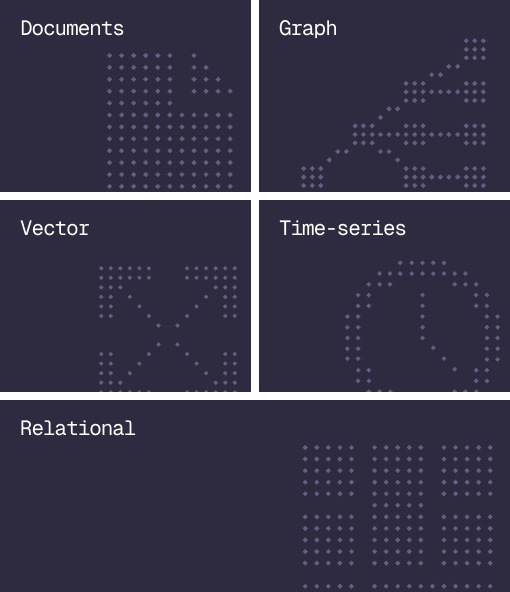
Database
Document, graph, vector, time-series and relational in one engine.
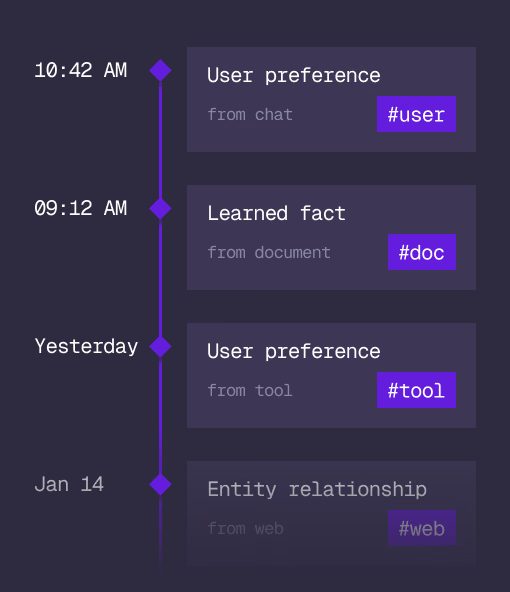
Agent Memory
What an agent learns, with its source and its time, in the same engine.
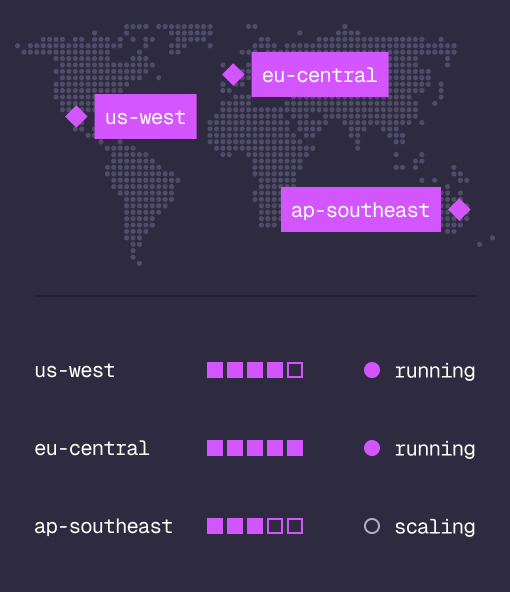
Cloud
Managed clusters in the regions you choose, scaled on demand.
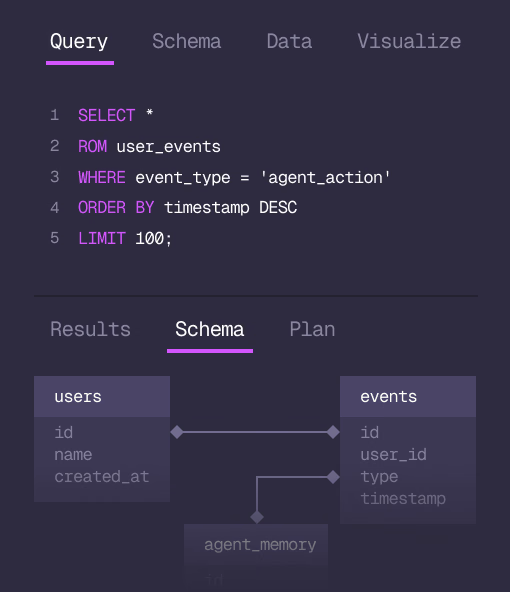
Studio
Query, explore and design the schema from the browser.
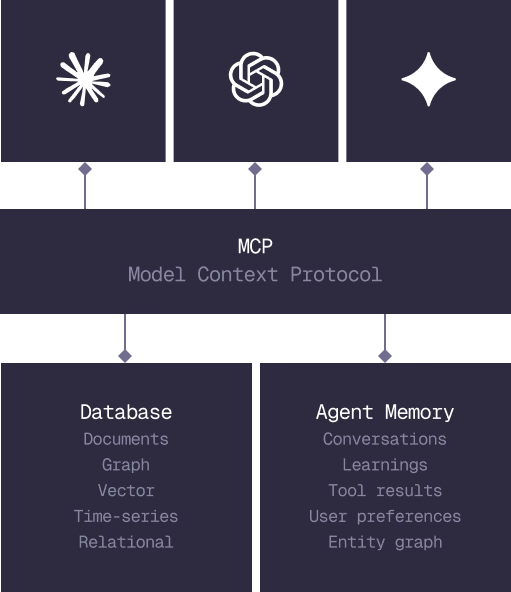
MCP
Every model that speaks MCP reaches the database and the memory directly.
IN PRODUCTION
Trusted at scale. Samsung, Nvidia, Verizon, Tencent, and Walmart run on SurrealDB.
14,000+
Developers building on SurrealDB Cloud
4M+
Developers building on SurrealDB worldwide
FROM THE TEAMS
SurrealDB gives us a foundation where we can unify semantic search, knowledge graphs, and AI-driven decision making without stitching together multiple systems. Collapsing responsibility into SurrealDB has become our default engineering posture.
VP of Engineering, Later
GET STARTED