



















01 |THE DIFFERENCE
Where Elasticsearch is synced into, SurrealDB searches the source
Elasticsearch is a search layer that data is synced into. SurrealDB makes search an index on the transactional data, so relevance, freshness and consistency come from one system.
Search on the data itself
Elasticsearch is a search layer that data is copied into through an ingest pipeline. In SurrealDB, full-text and vector search are index types on the transactional records, with nothing to sync.
Results that reflect committed data
Elasticsearch has no multi-document transactions, and search reflects writes only after an index refresh. SurrealDB is ACID with read-your-writes, so a search never trails the source of truth.
One binary, no cluster to tune
Elasticsearch is a JVM cluster with heap tuning, shard sizing and rebalancing as routine work. SurrealDB is a single Rust binary that runs embedded, single-node or clustered without shard planning.
02 |THE SAME QUERY
Similar documents, from one team, this quarter. A kNN clause over fields an ingest pipeline flattened in. One statement in SurrealQL, following the relationship itself.
Elasticsearch (Query DSL)
SurrealQL
03 |HOW IT COMPARES
How SurrealDB and Elasticsearch differ
A search cluster beside the primary database means an ingest pipeline to build and reconcile, and results that lag the source of truth.
04 |MIGRATION
Moving off Elasticsearch. Export, translate the mappings, port the queries, then cut over.
Search is an index definition
Export documents with the scroll or point-in-time API and bulk-insert them; translate mappings into table and field definitions; recreate analysers and indexes; port Query DSL to SurrealQL. Most teams run both in parallel until results match, then cut over. Talk to us about a migration workshop.
TRUSTED BY
Enterprise teams building on SurrealDB








Elasticsearch,answered
THE PLATFORM
Everything an application and its agents know. Five surfaces, one engine.
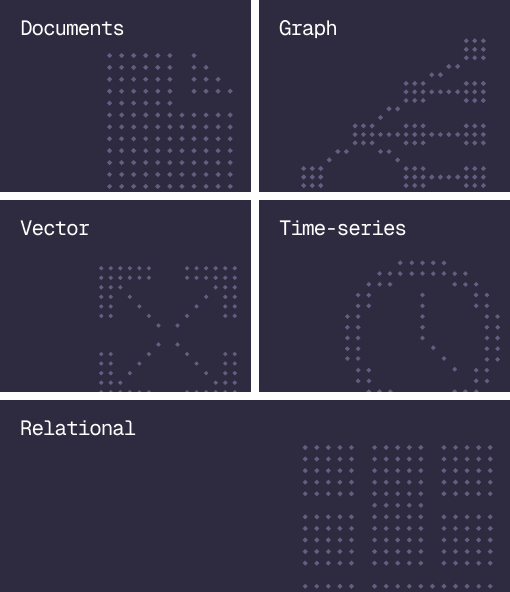
Database
Document, graph, vector, time-series and relational in one engine.
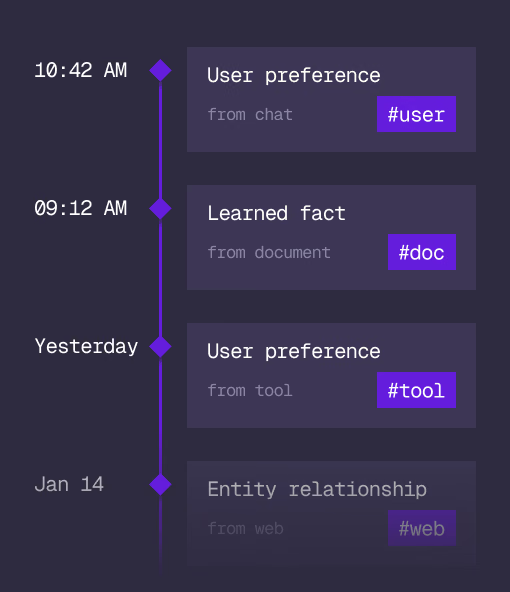
Agent Memory
What an agent learns, with its source and its time, in the same engine.
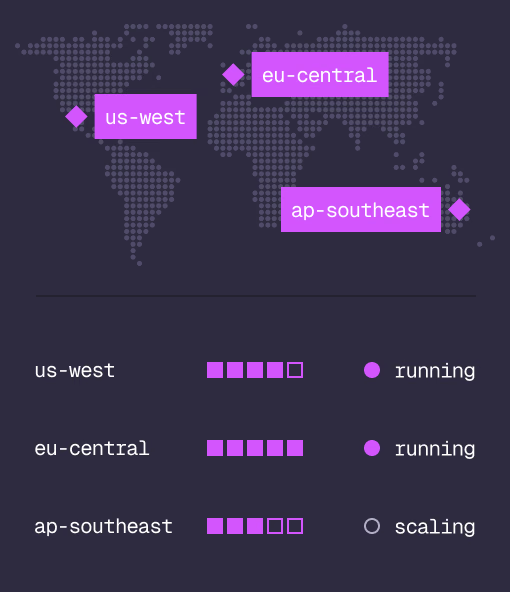
Cloud
Managed clusters in the regions you choose, scaled on demand.
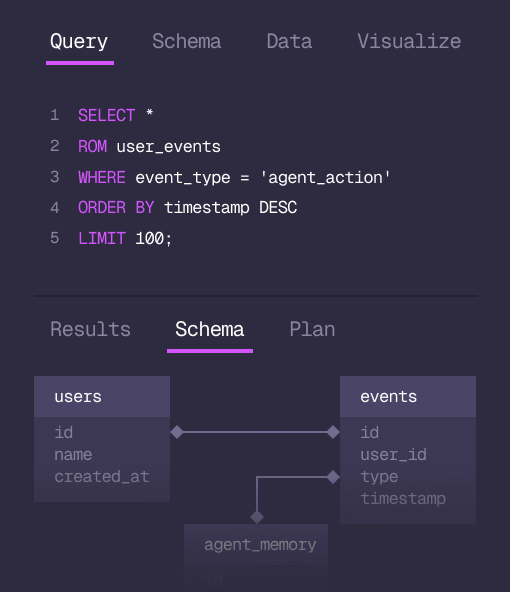
Studio
Query, explore and design the schema from the browser.
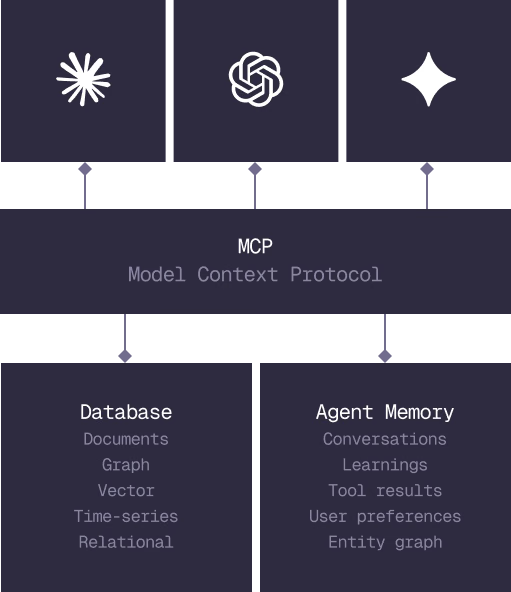
MCP
Every model that speaks MCP reaches the database and the memory directly.
IN PRODUCTION
Trusted at scale. Samsung, Nvidia, Verizon, Tencent, and Walmart run on SurrealDB.
14,000+
Developers building on SurrealDB Cloud
4M+
Developers building on SurrealDB worldwide
FROM THE TEAMS
SurrealDB gives us a foundation where we can unify semantic search, knowledge graphs, and AI-driven decision making without stitching together multiple systems. Collapsing responsibility into SurrealDB has become our default engineering posture.
VP of Engineering, Later
GET STARTED