

















Enabling the next generation of intelligent systems
Digital twins have evolved from niche aerospace simulation tools into the foundational control systems of modern enterprises. As organisations integrate AI and expand these virtual replicas across supply chains, smart cities, and healthcare networks, the primary barrier to scaling them is no longer simulation software or AI capability - it is data architecture. This paper explores why the next generation of intelligent systems demands a unified, multi-model data backbone, and why the memory and knowledge layer for the AI agents operating inside a twin belongs on the same substrate.
Key takeaways
From assets to ecosystems: how digital twins are shifting from monitoring single machines to simulating entire enterprise ecosystems and Digital Twins of the Organisation (DTOs).
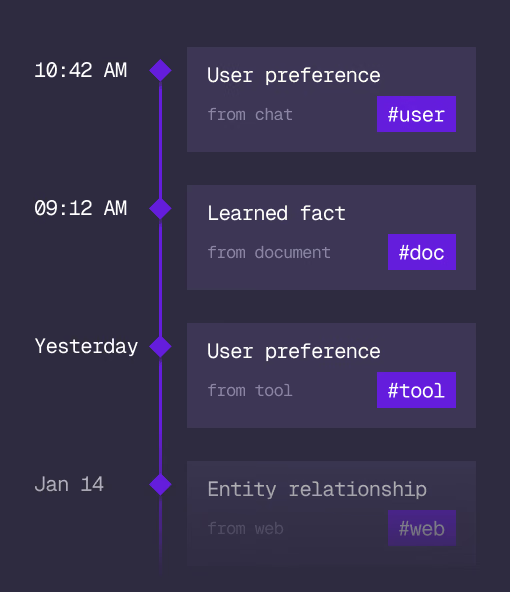
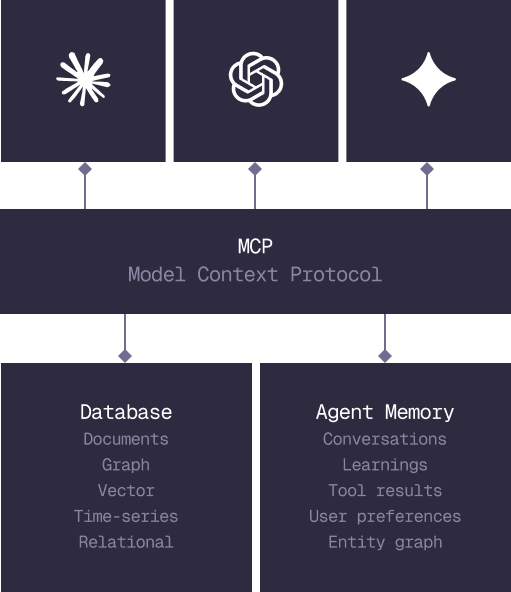
From mirrors to environments for agents: how twins increasingly host AI agents, and why those agents need durable, auditable memory with the same architectural properties as the twin itself.
The hidden cost of polyglot persistence - why stitching together specialised databases, and bolting a separate memory store onto agents, introduces synchronisation risks, governance challenges, and operational friction.
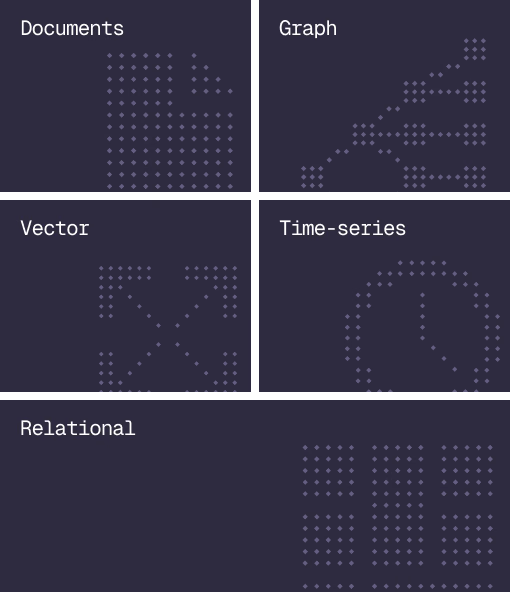
The multi-model advantage: how natively unifying graph, document, vector and temporal data enables real-time responsiveness, scenario branching, and safe AI experimentation without crossing system boundaries.
Actionable technical implementation - concrete examples of how to model, populate, and query complex industrial assets, their dependencies, and the memory an agent forms about them within a single, coherent data layer.
What's inside
- Executive summary
- Enabling the next generation of intelligent systems
- The evolution of the digital twin
- Current industry applications of digital twins
- Emerging and future use cases
- The architectural attributes required for digital twins
- Design principles for digital twin data platforms
- Memory and knowledge as twin infrastructure
- Why multi-model databases are particularly suited
- Technical deep dive
- How a digital twin is represented in a unified data system
- Enabling digital twins with a unified data backbone