
















Cobrainer runs an agentic graph RAG and a memory agent on one engine
Cobrainer, based in Munich, runs a skills-intelligence platform for HR teams. A startup moving at pace, it wanted better agent accuracy and token efficiency from one flexible database, with ergonomics that suit engineers and AI agents alike.
Challenge
Cobrainer's platform reads skills, roles and people and reasons about how they relate. As the team added an agentic graph RAG and an AI agent with graph-based memory, it wanted both from one engine rather than a fragmented stack with a tool per capability.
Flat vector retrieval surfaced only loosely related context, so the agent's answers were less accurate than the data allowed. Pulling broad vector matches into every prompt was wasteful too, inflating the tokens spent on each call.
The alternative the team weighed was Postgres with pgvector and search extensions, or OpenSearch bolted on beside it. Either meant new storage patterns and long migrations at exactly the moment a startup needs to move quickly.
Solution
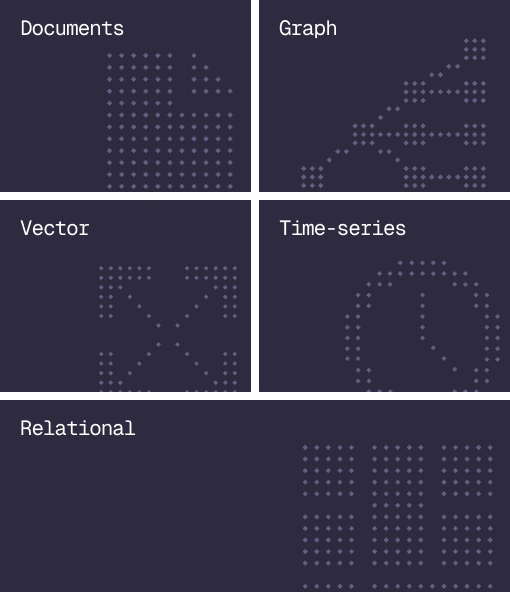
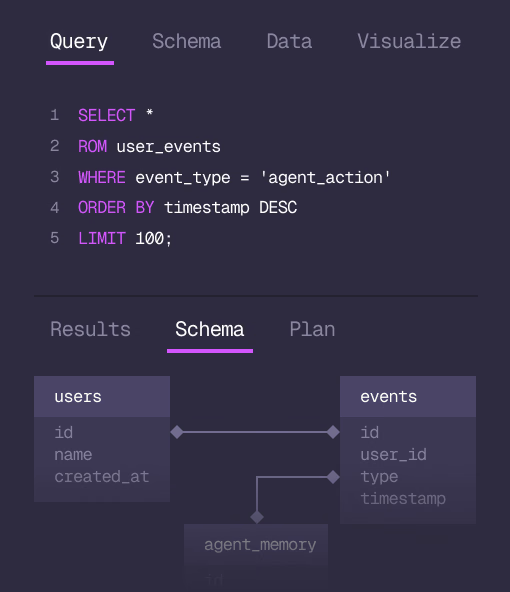
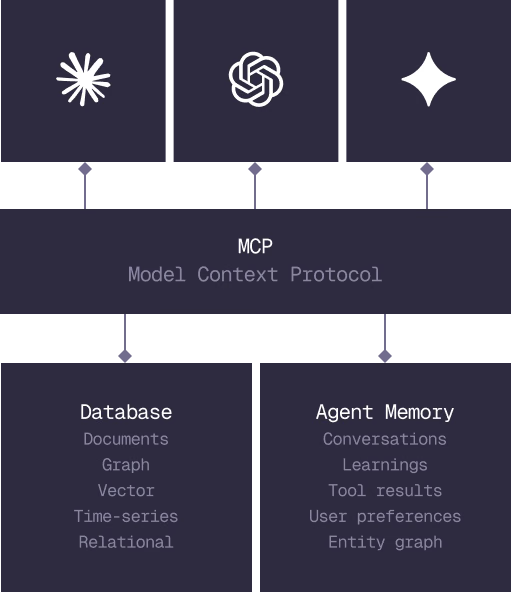
SurrealDB gave Cobrainer graph, vector and full-text in one engine, queried through SurrealQL. The agentic graph RAG is built natively on the Rust SDK, combining graph traversal and vector similarity in a single query, and it replaced the earlier S3 and OpenSearch RAG.
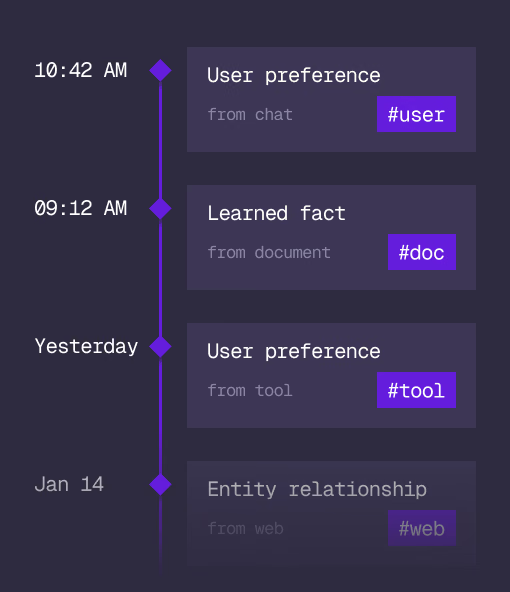
The AI agent's memory and session checkpoints live in the same database, in a multi-layered, graph-based memory model that the team stood up quickly. The graph the agent builds is the graph the RAG traverses.
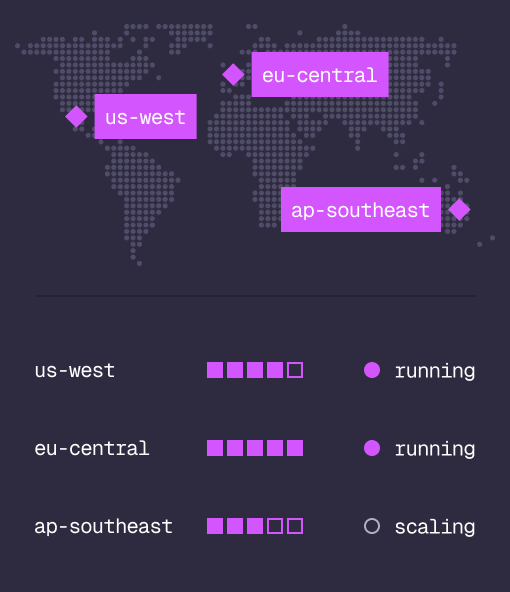
SurrealDB Cloud lets a lean team run the engine as a managed service with EU residency, keeping HR data inside the boundary its customers require.
Results
Graph, vector and full-text from one engine
The agentic graph RAG and the agent's memory run on SurrealDB, in place of pgvector and OpenSearch alongside Postgres.
More accurate agent responses
Graph traversal grounds answers in real relationships rather than loose vector matches.
Lower token cost per call
Only graph-relevant context reaches the prompt, so each call spends fewer tokens.
From evaluation to production in three months
The platform went from evaluation to a customer-facing production deployment, with data inside the EU throughout.
As a startup, we didn't want to fragment our stack every time we add a capability. For our agentic graph RAG, the alternative was weighing Postgres with pgvector and search extensions against bolting on OpenSearch, instead we got graph, vector, and full-text from one engine. What surprised us was how quickly we stood up a multi-layered, graph-based memory model for our AI agent, with SurrealDB handling its memory and session checkpoints. And SurrealDB Cloud kept all of it inside our EU data boundary.