
















Calamu replaced four cloud services with one embeddable engine for its distributed storage platform
Calamu Technologies builds data-protection software that fragments and distributes data so a breach yields nothing usable. Its platform runs in the cloud and on customers' own infrastructure, and the access control, metadata and telemetry behind it now live in SurrealDB.
Challenge
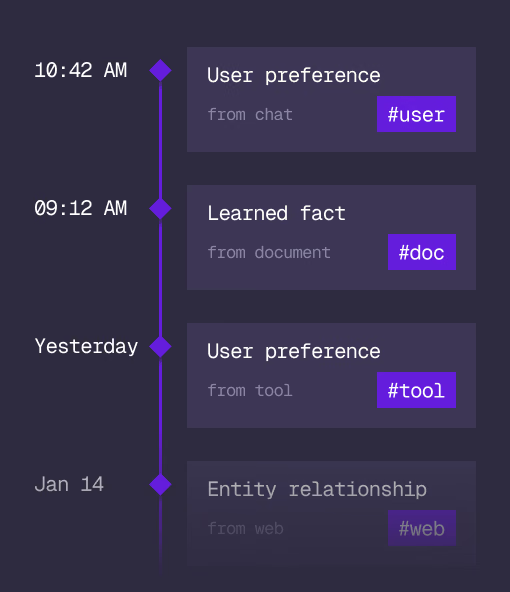
Calamu's platform protects data by fragmenting it and spreading the pieces across storage locations. The metadata that describes where every fragment lives, who may reach it and what happened to it is the heart of the product, and it has to be answered in milliseconds for backup and restore workflows to feel instant.
That metadata was spread across four services: DynamoDB for records, Neptune for the graph, Lambda for logic and Elasticsearch for search. The patchwork was expensive and slow to manage, and high-volume metadata patterns overloaded compound indexes in DynamoDB and caused drift between the stores.
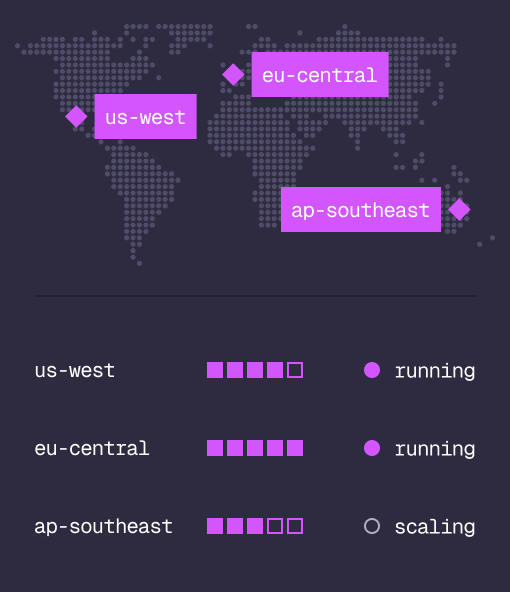
Calamu also sells to customers who run the platform on their own infrastructure. The same database had to run in the cloud and self-hosted with consistent access, which ruled out anything that only existed as a managed service.
Solution
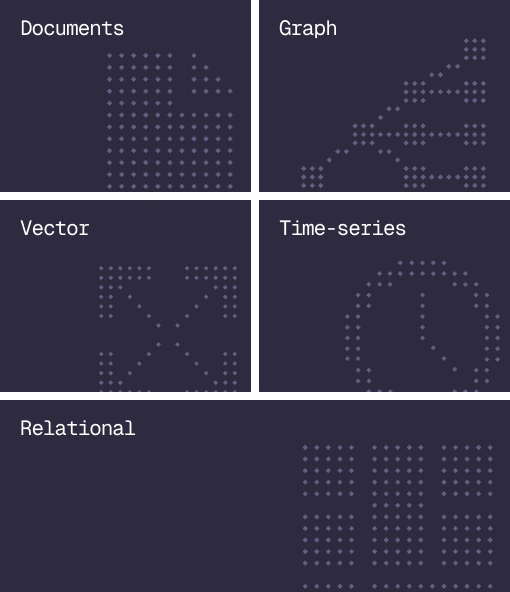
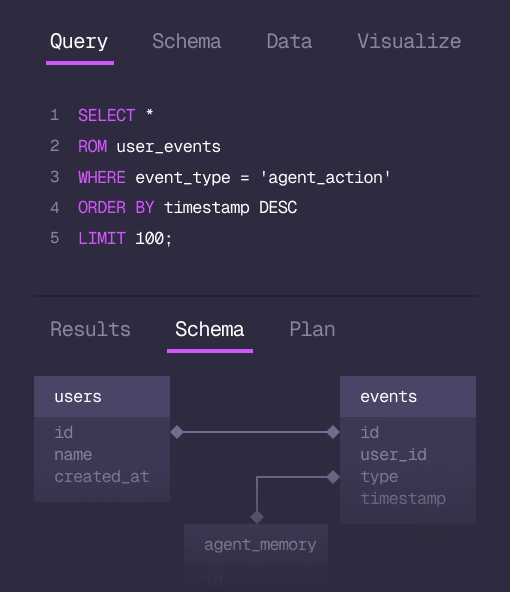
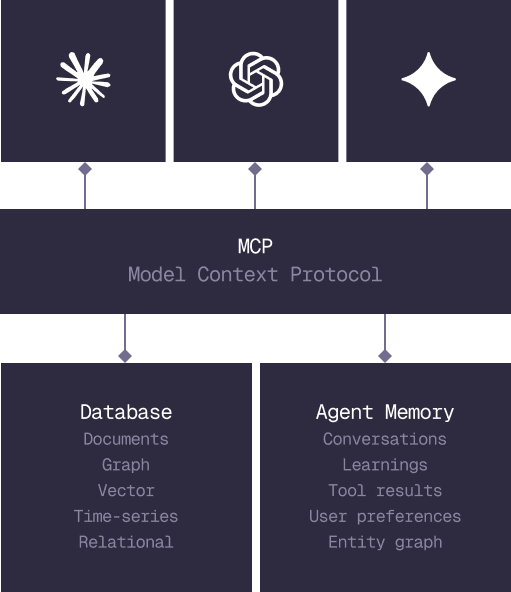
Calamu moved the metadata on to SurrealDB, one ACID engine for document and graph that replaced the four services. Records, relationships and search now live in one store with one query language across them.
Because SurrealDB is lightweight and embeddable, the same database runs in Calamu's cloud and inside customer environments. There is one deployment model to test and support, wherever the platform lands.
Range queries answer in the millisecond range over billions of records. Roll-up tables and asynchronous inserts keep the write path fast and lower infrastructure cost, and they give the team real-time observability into usage and cost from the same engine.
Results
Four services became one platform
DynamoDB, Neptune, Lambda and Elasticsearch were consolidated into SurrealDB, with the cost and operational complexity of four systems reduced to one.
Millisecond execution
Backup manifest creation dropped to millisecond execution, and range queries hold that range over billions of records.
A resilient architecture
Fault-tolerant deployments give consistent availability in the cloud and on customer infrastructure alike.
Insight built in
Roll-up tables give real-time observability into usage and cost without a separate analytics system.